
Water into Stone
Why Uploading Consciousness Won't Save Us

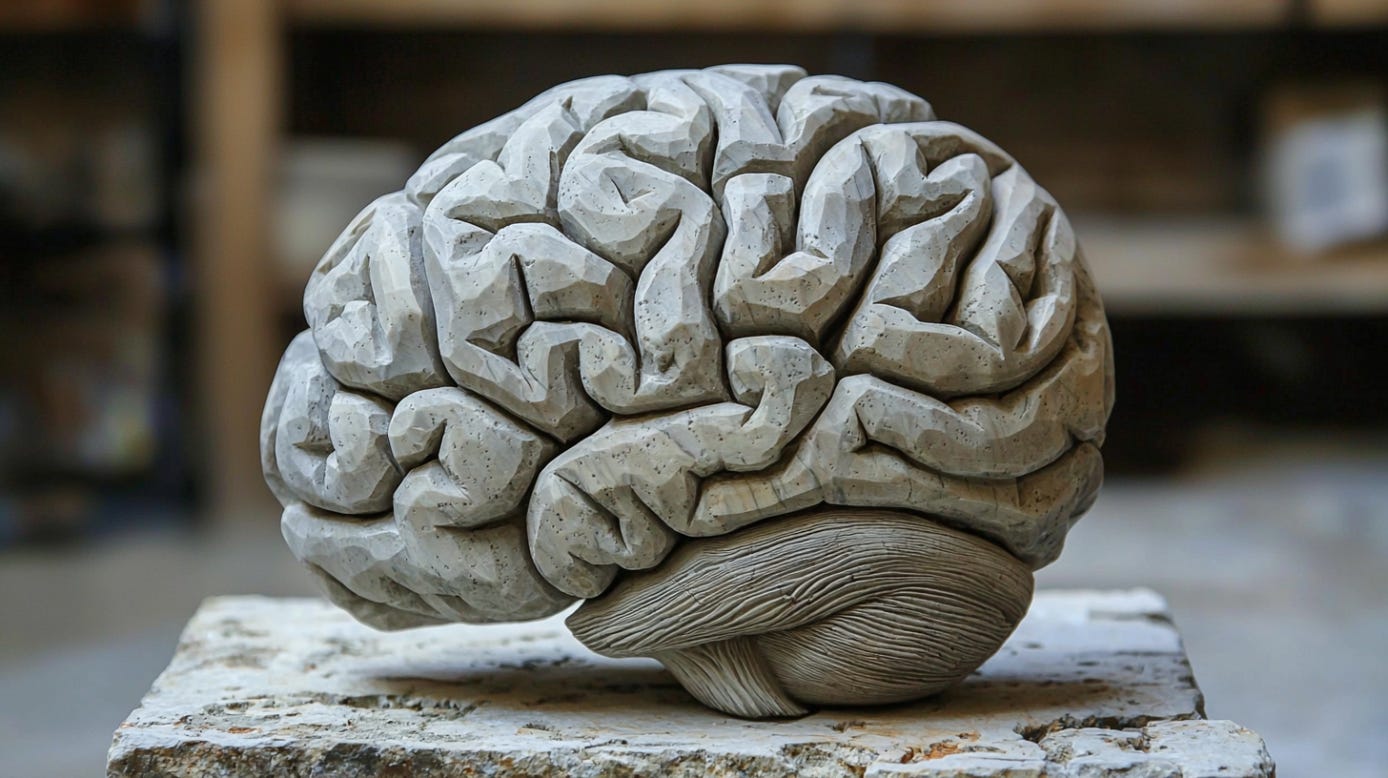
Imagine trying to turn water into stone. No matter how hard you try, water will always slip through your fingers. It changes shape, flows, adapts—it’s alive. But stone? It's solid, rigid, and fixed. Transhumanists want to do something similar by uploading our consciousness onto computers or robots, believing it'll grant us immortality. But here's the catch: consciousness isn’t who we really are. They're trying to solidify something fluid, hoping it’ll become permanent. But they're missing the point entirely.
Denis Noble, a groundbreaking physiologist, explains that our bodies are fundamentally different from computers. We're not silicon chips; we're fluid systems full of water, chemicals, and unpredictability. We interact dynamically with the world, constantly shifting and adapting. This fluidity allows something that no machine or algorithm can replicate: genuine adaptability, genuine creativity, and direct interaction with reality. See the video below for more context on this point:
Transhumanists assume consciousness is who we are. They believe that if we copy our consciousness onto a robot or a server, we'll live forever. But here's what's overlooked: consciousness is just the pattern. It's the stories, memories, and emotional responses we've accumulated. And yes, you might be able to replicate those perfectly. But that's not the being itself. That's not the you that actually experiences your life.
Physicist Roger Penrose thinks consciousness might come from quantum processes that traditional computers can't handle. While Penrose is insightful, even he hasn't yet realized that consciousness isn't the core issue—it's the being that's essential. Consciousness emerges around the being, not the other way around. No matter how sophisticated the computational or quantum processes become, they can't replicate the being that's truly experiencing awareness.
The reason I'm even exploring this is because the stakes are incredibly high. Right now, we're allowing powerful AI systems to shape nearly every aspect of our reality. Our kids and grandkids will grow up thinking these machines are superior, even godlike. They'll internalize a sense of inferiority, experiencing intense existential anxiety. Eventually, many will beg to become machines themselves, believing it's their only escape from the anxiety and fear built into the very fabric of the systems we’ve created. And it's not just speculation—I know this will happen because people already accept religious narratives without question simply because they make them feel better.
The transhumanist dream of escaping biological limitations mirrors traditional spiritual pursuits. Both are attempts to avoid facing the consequences of our actions. They're ways of seeking an external savior—be it advanced technology or divine intervention—that absolves us from having to take responsibility for the world we've created.
But what if the real issue isn't escaping biology or death? What if the real issue is our refusal to recognize that we've created the conditions we're trying so desperately to escape? From the moment we emerged into physical reality, we've rejected our inherent responsibility. We tried to exert power over reality instead of acknowledging that reality is something we're continuously shaping from within. And ironically, by seeking to control reality, we've created a system that controls us, generating existential anxiety, fear, and ultimately the very death we dread.
Philosopher Chris Langan’s “Reality Self-Simulation Principle” suggests reality isn't something external; it’s something we process internally. Everything we experience filters through our awareness. So the reality we perceive is fundamentally shaped by who we are as beings. If we view ourselves as limited, fearful, and powerless, that's exactly the reality we manifest. The fear of death, survival anxiety, and even our attraction to transhumanism or spirituality as saviors stem directly from this misunderstanding of who we really are.
The good news is that recognizing consciousness as just a pattern opens up the possibility of recreating ourselves. When we realize we're beings fundamentally responsible for reality, we become empowered rather than fearful. This understanding dissolves our existential anxieties because we're no longer identifying with something fragile, temporary, or external.
Our real challenge isn't figuring out how to escape this life or upload ourselves onto machines. It's about embracing our role as beings responsible for shaping reality right here, right now. It's about committing to creating a world that's genuinely supportive of all life—not just chasing illusions of immortality or external salvation.
We don't need to turn water into stone. We just need to recognize what it means to truly be alive.
See the video below for more context on who we really are beyond Consciousness: